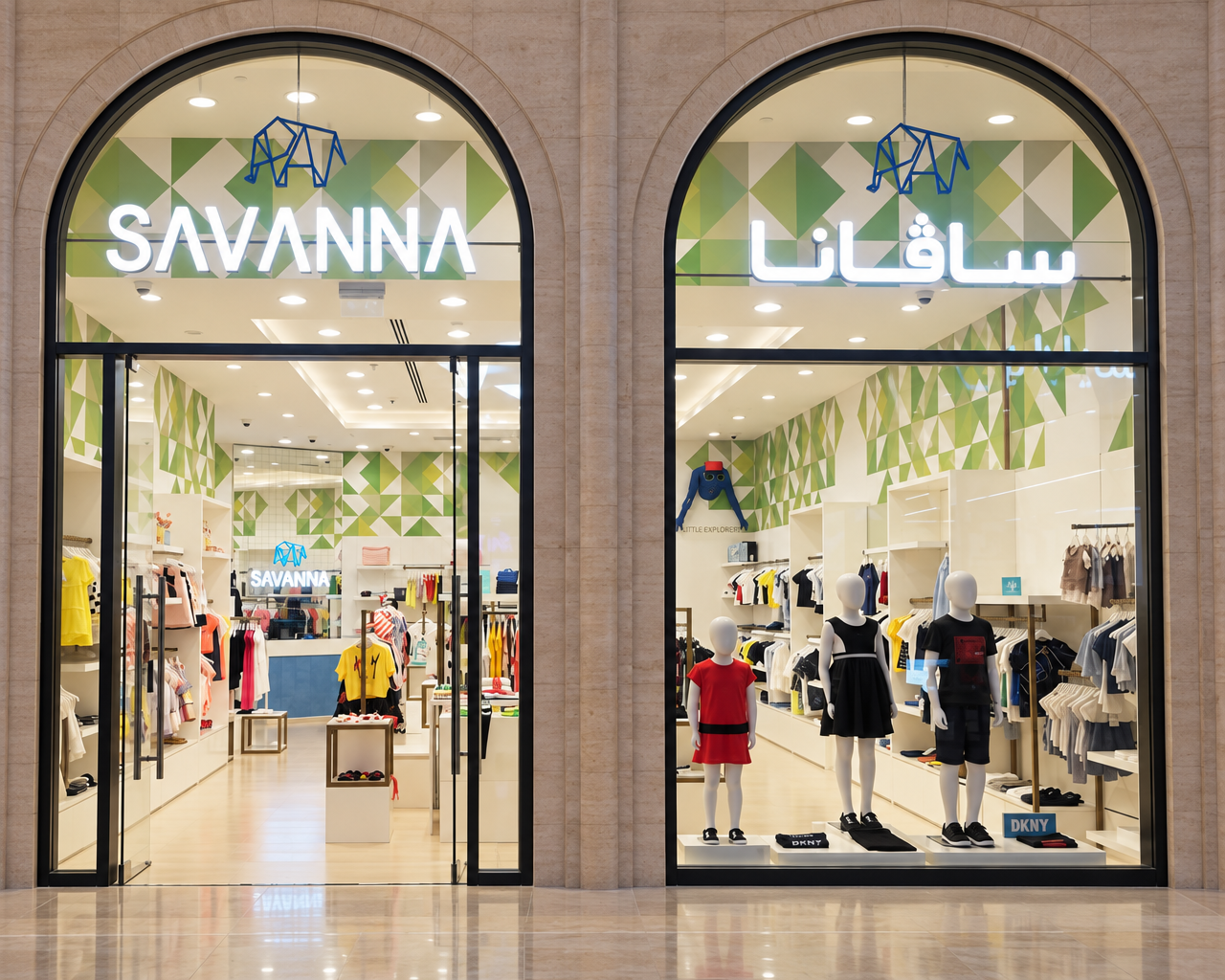
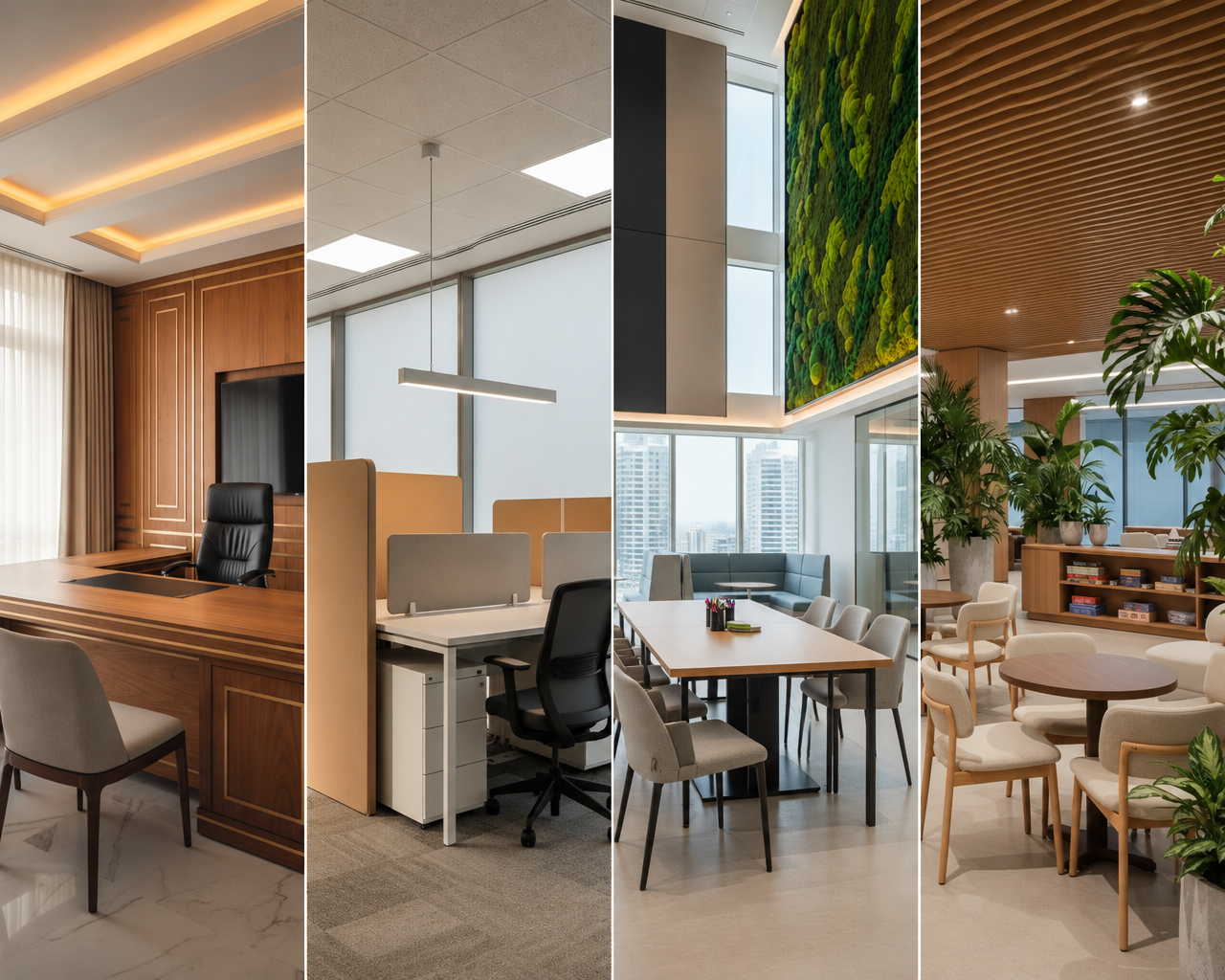
Planning a retail fit-out in Bahrain? Learn the 4 stages from permits and MEP to joinery and handover, plus mall rules, mistakes to avoid and how to hit your opening date.
Opening a store in a Bahrain mall is exciting, but every week of delay after the lease starts costs you money. A well-run retail shop fit-out is the difference between opening on your launch date and paying rent on an empty unit. This guide walks through the four stages of a turnkey fit-out in Bahrain, the approvals involved, the mistakes that cause delays, and the questions to ask any contractor before you sign.
What Is a Turnkey Fit-Out?
A turnkey fit-out means one accountable team takes your space from an empty shell to a store that is ready to trade. Instead of hiring a designer, a joinery workshop, an electrician and an air-conditioning company separately, you work with a single contractor responsible for demolition, civil works, MEP (mechanical, electrical and plumbing), custom joinery, ceilings, flooring and the final handover.
For retailers, restaurants and offices in Bahrain and across the GCC, the turnkey model has three clear advantages:
•One point of contact for site operations, permits and quality control.
•A single timeline instead of several trades waiting on each other.
•Clear accountability: if something is wrong, there is no finger-pointing between subcontractors.
Stage 1: Site Survey, Design Review and Permits
Every successful retail fit-out starts before anyone picks up a tool. In this stage the contractor:
1. Surveys the unit to verify dimensions, ceiling height, services and structural limits.
2. Reviews the design and brand guidelines. International brands often arrive with strict global specifications that must be adapted to local standards and materials.
3. Prepares the authority submissions. Depending on the project, approvals can involve the municipality, civil defense, and the electricity and water authorities.
4. Builds the programme that works backwards from your opening date.
Tip: Ask your contractor who handles the authority approvals. A contractor that manages them on your behalf removes one of the biggest sources of hidden delay.
Stage 2: Civil Works and MEP Infrastructure
This is the stage customers never see, but it decides how well the store works for the next ten years. It covers demolition, partitions, raised floors, acoustic ceilings, cabling, ducting, plumbing, and any structural reinforcement.
MEP deserves special attention in retail. Lighting loads, air-conditioning capacity, data points for payment terminals and power for digital displays all have to be designed in from day one. Adding them later means opening finished walls and ceilings.
Why integration matters: when MEP is delivered by the same team as the fit-out, ducts, cable routes and light fittings are coordinated with the ceiling and joinery design. That avoids clashes on site, which are a common cause of rework.
Stage 3: Joinery and Finishes
Joinery is where a store gets its personality: shelving, display units, cash counters, wall panelling, doors and feature ceilings. Finishes include flooring, wall cladding, metalwork, stone and paint.
The biggest lever here is who manufactures the joinery. When a contractor owns its manufacturing facility, there is no waiting on a third-party workshop, drawings go straight to the factory floor, and quality can be checked before anything reaches the site. Custom pieces can be produced to millimetre tolerances and installed quickly in the limited access windows that malls allow.
Lighting also belongs in this stage. Layered lighting, with ambient, accent and display light working together, can make products look more valuable and the whole space feel larger and more welcoming. Slim-profile LED lines, cove lighting and bespoke fixtures should be specified together with the joinery so the light and the furniture are designed as one system.
Stage 4: Commissioning, Authority Clearance and Handover
The final stage is about proving that everything works. It includes:
•Testing of electrical, lighting, HVAC and plumbing systems
•Deep cleaning and snagging
•Final authority inspections and clearances
•Training your team on any special systems, such as digital signage or controlled lighting
•Key handover, with documentation
A professional handover is a checklist, not a handshake. Insist on a written snag list and a clear date for closing it.
Mall Fit-Outs in Bahrain: What Is Different?
Working inside an operating mall is very different from working on a standalone building. Malls usually impose:
•Night-shift or restricted working windows, so noisy and dusty work does not disturb neighbouring tenants and shoppers.
•Strict security and access procedures for people, vehicles and materials.
•Mandatory hoarding and finish standards while the store is under construction.
•Landlord design approval before work starts.
Airside locations, such as airports, add even tighter security protocols. A contractor with proven experience in these environments will plan deliveries, crews and noise-generating tasks around the rules instead of discovering them mid-project.
6 Common Fit-Out Mistakes (and How to Avoid Them)
1. Starting construction before design is frozen. Late changes are the most expensive changes. Lock layouts and finishes before site work begins.
2. Ignoring lead times. Special stone, imported fixtures and bespoke lighting can take weeks. Order early, or choose locally manufactured alternatives.
3. Underestimating MEP. A beautiful store with weak air conditioning or too few power points will frustrate staff and customers.
4. Choosing on price alone. The cheapest quote often leaves out permits, joinery detail or after-handover support.
5. No single accountable party. Multiple subcontractors mean multiple schedules. Choose one team responsible for the result.
6. Skipping the handover discipline. Without a snag list, small defects become permanent features.
How to Choose a Fit-Out Contractor in Bahrain
Use this checklist when you compare contractors:
| Question to ask | Why it matters |
|---|---|
| Do they manage design, MEP, joinery and installation in-house? | Fewer handovers, fewer delays, more control over quality |
| Do they own a manufacturing facility in Bahrain? | Faster production, tighter tolerances, easier changes |
| Are they ISO certified (quality, environment, health and safety)? | Shows documented, audited processes on site |
| Can they show similar projects in malls or comparable locations? | Proven experience with landlord rules and tight windows |
| Do they handle authority approvals for you? | Removes a major source of uncertainty |
| What is their record on handover dates? | Your opening date is a commercial commitment |
Frequently Asked Questions
How long does a retail shop fit-out take in Bahrain?
Duration depends on unit size, design complexity, the lead time of materials and the speed of approvals. A clear programme agreed at the start, with milestones for permits, MEP, joinery and handover, is the best protection against delay. Ask any contractor for a written schedule built backwards from your opening date.
Do I need separate contractors for design, joinery and MEP?
No. A turnkey contractor can manage all of them under one contract and one timeline, which usually reduces coordination problems and speeds up delivery.
Who obtains the authority approvals?
This should be agreed in writing before the contract is signed. Many turnkey contractors, including Abacus, obtain municipality, civil defense, electricity and water authority clearances on the client's behalf.
Can a fit-out be done while neighbouring shops are open?
Yes. In malls, work is normally scheduled in controlled windows, often at night, and follows the landlord's rules so neighbouring tenants are not disrupted.
What is the difference between a fit-out and a renovation?
A fit-out prepares a new or empty space for its first use. A renovation or refurbishment modernises an existing space, ideally with minimal disruption to ongoing operations.
Planning Your Next Retail Space?
For 24 years, Abacus has delivered mall boutiques, F&B outlets and corporate offices across Bahrain and the GCC with a single accountable team: design, in-house joinery manufacturing, MEP, installation and handover. We are triple ISO-certified (ISO 9001, ISO 14001 and ISO 45001), and we have never missed a handover date.
Ready to talk about your opening date? Request a project proposal and our team will review your plans and timeline.
Related reading: Natural Stone Selection Guide, LED Lighting Design: 7 Ways to Transform Spaces and Fit-Out & Turnkey Contracting.